Updated
Our verdict: Walter Writes is our pick for self-serve revision, with a 300-word humanizer trial advertised on Walter’s homepage, checked November 9, 2026. For Walter Writes vs Turnitin, choose by task: Walter supports drafting and checking, while your institution’s Turnitin workflow supplies its required submission report. Walter’s output is not a Turnitin report. A rewrite or a low score elsewhere cannot guarantee how Turnitin will assess a submitted document.
| Question | Walter Writes | Turnitin |
|---|---|---|
| Main task here | Draft rewriting and a separate AI check | Institutional submission and report review |
| Where to begin | Official Walter product page | The route supplied by your institution |
| What to interpret | The exact detector label and submitted text | The AI Writing Report and qualifying text |
| Does the score decide misconduct? | No authorship conclusion from a score alone | Human judgment and institutional policy are required |
| Best fit | Writers reviewing their own draft | Educators reviewing an institutional report |
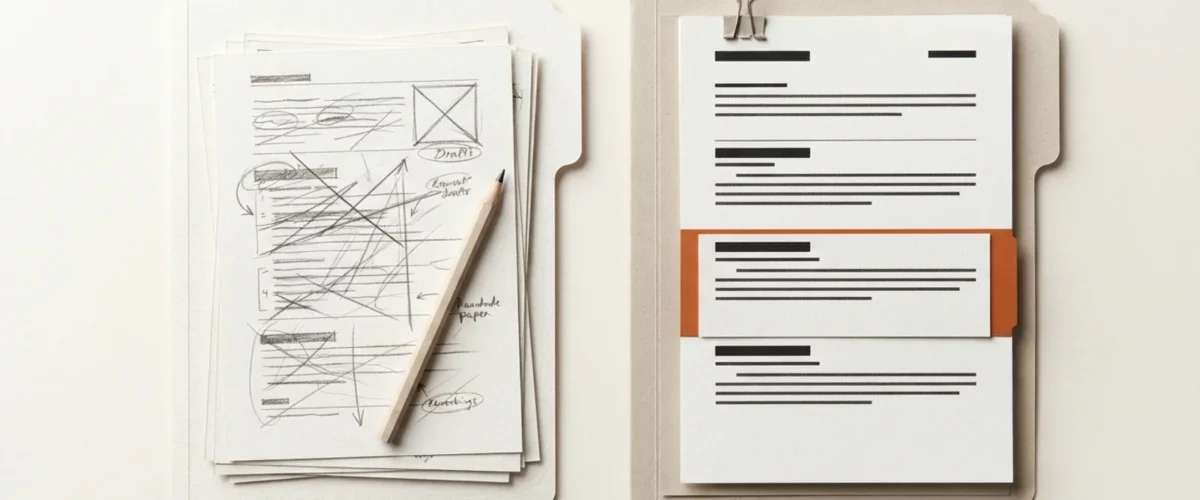
Walter Writes and Turnitin solve different problems
Walter Writes offers a humanizer and a detector. A writer can use the rewriting product to consider alternative wording, then review the result. The detector provides an automated signal on supplied text. These are useful parts of a draft-review process, but they should not be confused with an institution’s assessment system.
Turnitin’s AI Writing Report documentation describes an estimate about qualifying prose in a submitted document. The AI-writing percentage is separate from the similarity score. That distinction matters even before comparing Turnitin with Walter: two reports inside the same assessment workflow can answer different questions.
Our recommendation is based on task fit. Walter is the relevant choice when you want direct access to a writing-and-checking product. Turnitin is the relevant report when your institution uses Turnitin for the assignment. Neither choice removes the need to read the work and apply the rules for that setting.
Can Turnitin detect text rewritten with Walter Writes?
Rewritten text can still receive an AI-related flag. Turnitin says its detection capability addresses likely generated writing, including writing that may have been modified with paraphrasing or bypasser tools. That description does not supply a reliable prediction for an individual Walter revision.
The complete submitted text, the original source, the extent of editing and the detector in use all matter to interpreting an outcome. A screenshot of one passage cannot establish a universal result for future documents. Equally, a single flag is not a sound basis for claiming that a rewriting product never helps a writer improve prose.
Keep the editorial and assessment questions separate. A revision can improve an unclear sentence while still receiving a flag. A revision can also receive a lower score while introducing a factual error. Read the final document for its actual quality and follow the assignment’s permitted-use policy.
Does Walter Writes bypass Turnitin?
There is no dependable promise that Walter rewriting will produce a particular Turnitin outcome. Search results often reduce the question to a pass or fail screenshot, but a defensible comparison needs the full input, output, report date, sample selection and all results. Without that context, a claimed rate cannot tell you what to expect on your own work.
Use Walter to help with permitted drafting and revision tasks. Preserve the meaning of your argument, check references and disclose assistance where required. Choosing a writing workflow around a promised detector outcome can distract from the requirements that actually determine whether a submission is acceptable.
For the product evaluation behind this recommendation, read our Walter Writes review. For how to interpret its separate detector, use the Walter AI detector guide.
Why a Walter result cannot predict a Turnitin percentage
To compare outputs, first establish what each value measures. A Walter interface may describe AI or human likelihood. Turnitin describes the share of qualifying text assessed as likely AI-generated or AI-modified. Similar-looking percentages do not make those outputs interchangeable.
Input differences also matter. If you check a paragraph with Walter but submit an essay with headings, quotations and references through your institution, you have supplied different material to different systems. Save the exact text and the report context before making any claim about disagreement.
A meaningful comparison is therefore more than a before-and-after image. It records the unchanged sample, each report’s label and the time of the check. It also separates an actual completed report from an error, an unavailable indicator or a processing state.
AI detection and similarity are separate checks
A similarity report concerns matching text; an AI report concerns patterns associated with generated or modified writing. A properly quoted passage may contribute to similarity without proving misconduct. An AI estimate does not establish whether the argument’s sources are real or correctly cited.
Read both reports in relation to the assignment. If a passage quotes a source, inspect the quotation and reference. If a passage receives an AI flag, investigate its drafting context and the applicable policy. Treating either percentage as an automatic verdict skips the review that gives the report meaning.
For a fuller explanation of the institutional system, see our Turnitin AI detection guide and Turnitin accuracy discussion. Our source-overlap guide explains the separate role of plagiarism review.
What to do when your writing receives a flag
Start by obtaining the actual report through the appropriate institutional route. Identify the highlighted text and ask which policy or requirement is relevant. A claim that a document “failed AI” is less useful than a specific passage and a clear description of the concern.
Collect existing drafts, research notes and version history that help explain the writing process. Keep the submitted version unchanged while the issue is discussed. If you used assistance that was permitted, explain what it did and retain the before-and-after text where available.
Turnitin’s educator guidance emphasizes considering the report with other information and personal knowledge of the student’s work. Your institution’s process governs the next step. A result from Walter or another public checker can be contextual information, but it is not a replacement for that process.
Walter Writes vs Turnitin: which workflow should you choose?
- For a writer editing their own draft: use Walter to consider revisions, then inspect meaning and sources. Our Walter usage guide provides a practical review sequence.
- For a student: establish the permitted level of assistance before uploading or rewriting assignment text. Retain your original work and follow the required submission route.
- For an educator: apply the institution’s report-review process and discuss specific concerns rather than relying on a bare percentage.
- For an editor: check factual claims, provenance and permissions alongside any detector estimate. A polished style is only one part of publication readiness.
Comparison method and sources
This comparison uses Walter’s current product descriptions and Turnitin’s report documentation, checked on November 9, 2026. The table compares the purpose and interpretation of the tools. It does not convert one product’s score into the other’s scale.
Weber-Wulff and colleagues’ detection-tool research provides historical context for why text modification and error analysis matter. Its results belong to the systems and materials studied. Use a current, fully recorded sample set for a contemporary product-performance comparison.
Walter Writes: choose it for self-directed draft review
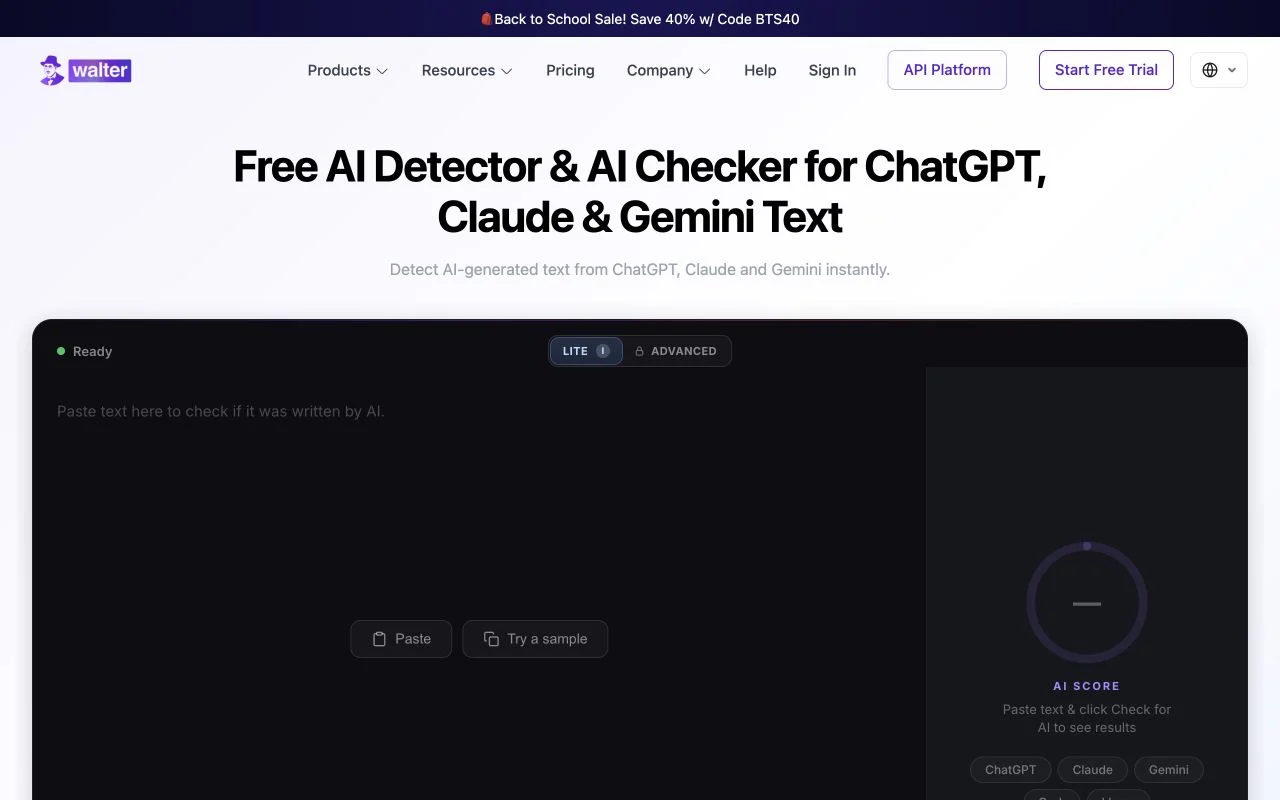
Verdict: Walter is the relevant option when you want to revise your own wording and run a public AI check. Best for: writers and editors working on drafts they are allowed to share. Main limitation: the resulting estimate is not an institution’s Turnitin report. Access: use the official Walter product page and its current conditions.
Turnitin: use the report required by your institution
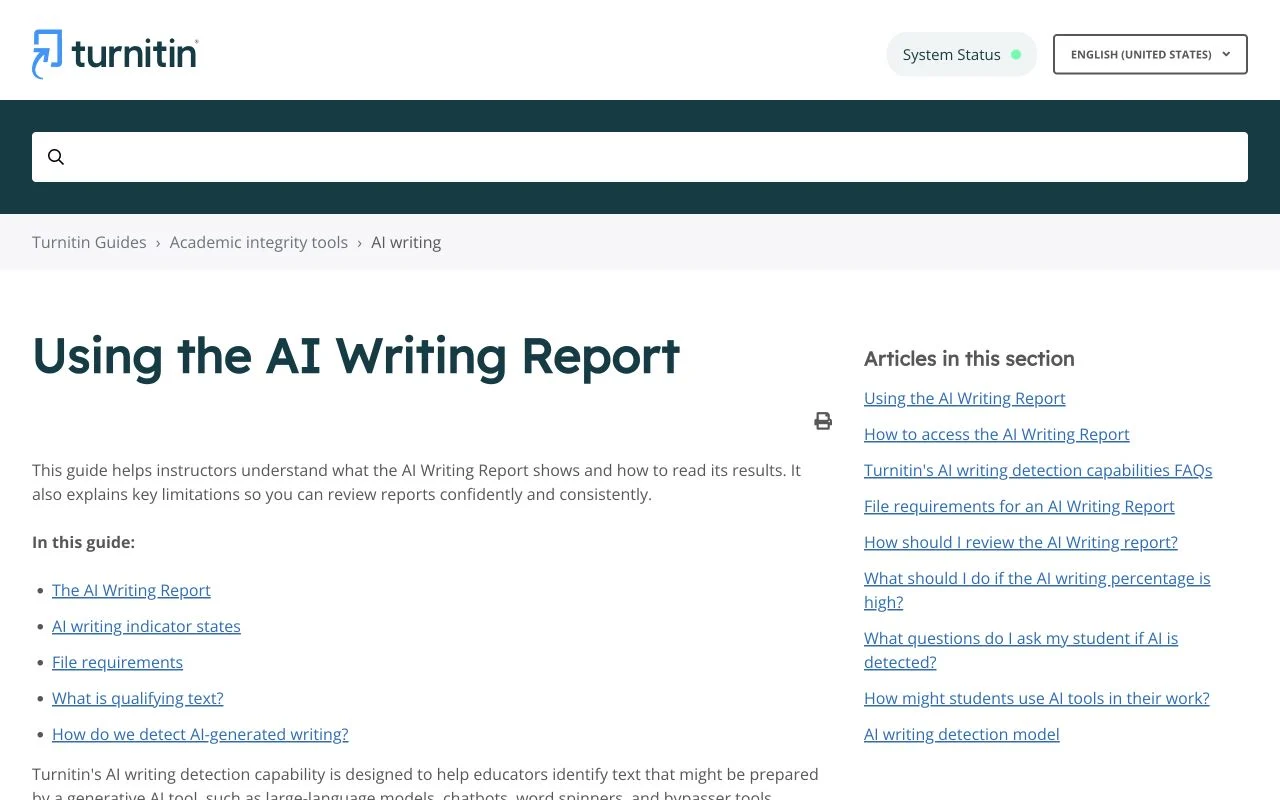
Verdict: follow Turnitin’s submission route when your institution requires it. Best for: educators and students working within that assessment process. Main limitation: a report still requires interpretation alongside the work and relevant policy. Access: use the route supplied by your institution and ask its reviewer about the available report.
An example of a comparison that answers the wrong question
Checking a single rewritten paragraph in Walter and submitting the complete essay through Turnitin does not compare the same input. The reports describe different material, and the systems may define their percentages differently. Save the exact paragraph and the submitted file before attempting to explain the difference.
A useful review record identifies the passage, the product, the result label and the time. If the question concerns permitted assistance, include the assignment policy and what assistance was used. Neither a public checker result nor a polished rewrite replaces those facts. This example explains report scope; it does not assign a score or predict an outcome for either service.
How this guide reaches its recommendation
The editorial criteria are task fit, access, interpretation and the evidence a reader needs to make a decision. Product descriptions establish available features; the examples show how to review a draft or a report. Performance conclusions require results tied to the actual samples, products and dates. Keep those measures separate when comparing any review.
Spotted an outdated product detail? Send a correction to AI Text Detector with the page address and a link to the current source.
Explore the Walter Writes guides
Frequently asked questions
Is Walter Writes the same as Turnitin?
No. Walter offers writing and checking products, while Turnitin is commonly used through institutional assessment workflows. A Walter detector output is not a Turnitin AI Writing Report and should not be presented as one.
Does Walter Writes guarantee a Turnitin pass?
No reliable guarantee applies to an individual submission. Use rewriting only where it is permitted and judge revisions by accuracy and clarity. Follow the assignment rules rather than treating an external score as permission.
Can Turnitin detect humanized text?
Turnitin says its AI capability includes assessment of likely generated text that may have been altered with paraphrasing or bypasser tools. That product description does not determine the outcome of every revised passage or identify which service edited it.
Why does Walter say human but Turnitin flags AI?
The systems can differ in models, labels and the material processed. Compare the exact input and report definitions before interpreting the disagreement. The reports remain estimates and should be considered with other relevant evidence.
Does a low similarity score mean low AI detection?
No. Similarity and AI-writing assessment are separate. Matching-source review and AI-pattern assessment answer different questions, so a low value in one report does not determine the value in the other.
Can Walter show my actual Turnitin report?
A Walter result should not be described as your institutional Turnitin report. Obtain the actual report through the route provided by your school or organisation and ask the appropriate reviewer about access or interpretation.
Is Walter useful before submitting an assignment?
It can support a permitted writing-review workflow, but first check your assignment policy. Review meaning and citations after any revision, preserve your drafts and disclose assistance as required. A detector score cannot certify compliance.
What should a teacher do with an AI flag?
Review the specific passage alongside drafts, source checks and institutional policy. Turnitin treats its AI report as one data point requiring human judgment. Use the established process and allow the writer to explain relevant evidence.