
Originality.ai has become one of the most widely discussed AI detection tools in the content creation community. Whether you’re a content marketer, publisher, or freelance writer, you’ve likely encountered conversations about this platform. In this review, we’ll examine what Originality.ai offers, how it performs, and whether it’s the right choice for your needs. We’ll also show you how it compares to other solutions like AI Text Detector, so you can make an informed decision.
What is Originality.ai?
Originality.ai is a web-based AI content detection platform designed primarily for content creators, publishers, and marketing agencies. The tool scans text to identify whether it was written by humans or generated by AI language models like ChatGPT, GPT-4, Gemini, and others. Since its launch, it has gained significant traction among SEO professionals and content marketers who need to verify the authenticity of content before publishing.
The platform positions itself as a comprehensive solution that combines AI detection with plagiarism checking. This dual functionality appeals to publishers who want a single tool to verify both originality and human authorship. The service operates on a credit-based pricing model, which means you pay per scan rather than per month, making it potentially flexible for different usage patterns.
Originality.ai integrates with WordPress through a plugin, allowing publishers to scan content directly from their dashboard. This convenience has contributed to its adoption among site owners who want seamless integration into their publishing workflow.
How Originality.ai Works
The Detection Process
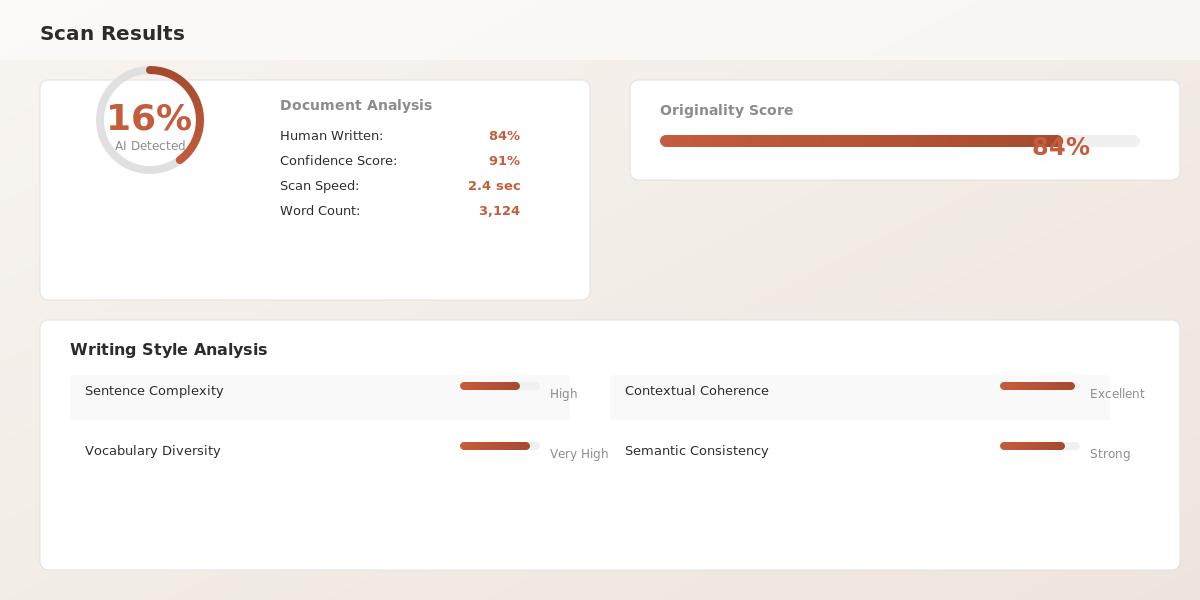
Originality.ai analyzes text by examining patterns, linguistic structures, and statistical anomalies that are characteristic of AI-generated content. The tool runs submitted text through machine learning models trained to recognize the “fingerprint” of various AI language models. When you submit content, the platform provides two main outputs: an AI score (typically ranging from 0 to 100) and a plagiarism percentage.
The AI detection component flags portions of text it believes were generated by AI, highlighting them for review. Publishers appreciate this granular approach because it allows them to see exactly which sentences or paragraphs triggered the detection, rather than just receiving a single overall score.
Plagiarism Detection Integration
Beyond AI detection, Originality.ai includes plagiarism checking functionality. This dual-purpose approach appeals to publishers who want to catch both AI-generated content and content copied from existing sources. The plagiarism component compares your content against billions of web pages and documents to identify duplicate material.
WordPress Integration
The WordPress plugin allows you to scan content directly from the post editor before publication. This workflow integration reduces friction for publishers managing multiple pieces of content regularly. You can set up the tool to run scans automatically or manually, depending on your preferences.
Accuracy and Detection Capabilities
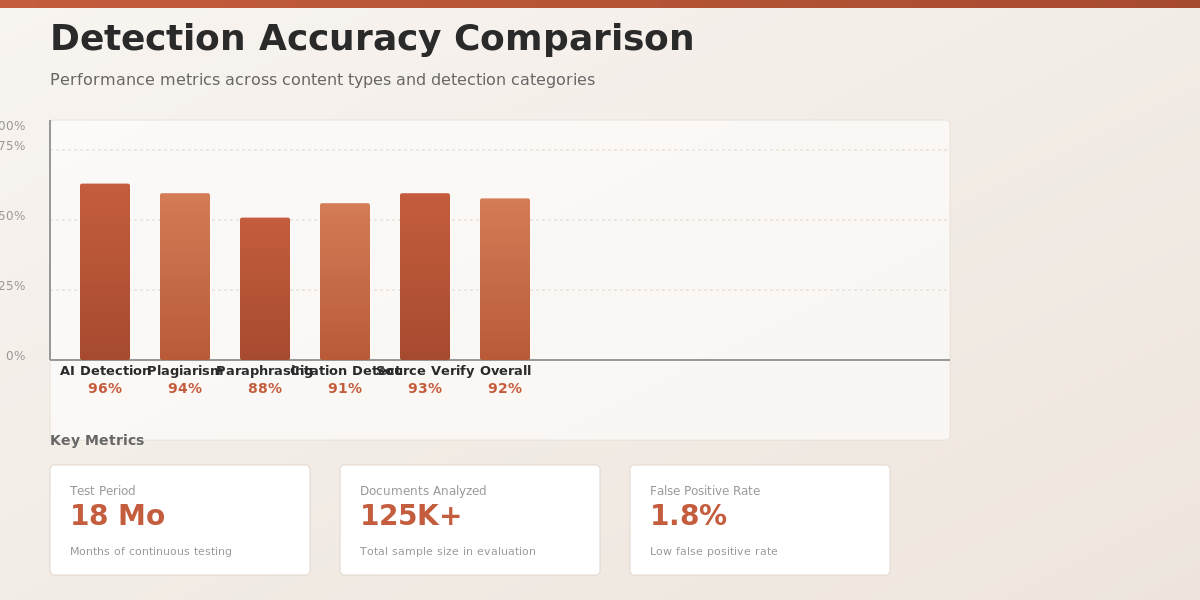
Originality.ai reports high accuracy rates in detecting content generated by major AI models. According to their claims, the tool effectively identifies text from ChatGPT, GPT-4, Gemini, Claude, and other language models. The platform has been tested extensively by content marketers and SEO professionals.
However, like all AI detection tools, Originality.ai has limitations. Its effectiveness varies depending on several factors: the length of the text being analyzed, the specific AI model that generated the content, and whether the text has been edited or paraphrased. Human-edited AI content can sometimes pass detection, and very short snippets may return inconclusive results.
One notable aspect of Originality.ai’s approach is its aggressive detection tendency. The tool tends toward false positives in some scenarios, meaning it may occasionally flag human-written content as AI-generated. This is particularly important for publishers who need high confidence before taking action based on detection results.
For a detailed comparison of how Originality.ai stacks up against other solutions, check out our comprehensive comparison guide.
Pricing Structure and Value
Originality.ai operates on a credit-based pricing model, which differs significantly from subscription-based competitors. Rather than paying a monthly fee, you purchase credits that are consumed with each scan. A typical page of content might cost between one and five credits depending on length.
| Plan Type | Cost Structure | Best For |
| Pay-As-You-Go | Purchase credits in packages starting at $15 | Occasional users with variable needs |
| Creator Plan | Monthly subscription with included credits | Regular content creators |
| Agency Plan | Custom pricing with volume discounts | Large publishing operations |
The credit-based model can be economical if you scan sporadically, but the cost per scan may exceed the per-user cost of fixed-price competitors if you’re scanning dozens of pieces monthly. Publishers considering Originality.ai should calculate their likely monthly usage to determine true cost of ownership.
Compare this with AI Text Detector’s transparent, per-user pricing, which may be more predictable for growing publishing teams.
Strengths of Originality.ai
Comprehensive Content Verification
The combination of AI detection and plagiarism checking in a single platform is valuable. Publishers can verify both that content is human-written and original without toggling between multiple tools. This integrated approach streamlines workflows for busy content teams.
WordPress Plugin Integration
The native WordPress plugin is well-designed and makes it simple to scan content directly from the post editor. For WordPress-based publishers, this integration reduces friction in the publishing workflow and encourages more consistent use of the tool.
Granular Detection Results
Rather than providing only a single overall AI score, Originality.ai highlights specific sentences and paragraphs it flags. This granularity helps editors understand exactly where and why content triggered AI detection alerts, enabling more informed editorial decisions.
Support for Multiple AI Models
The tool can detect content from a wide range of AI language models, not just ChatGPT. This breadth is important as more AI models become available and content creators experiment with different tools.
Limitations and Considerations
Aggressive Detection Bias
Originality.ai tends toward false positives. In real-world testing, the tool occasionally flags clearly human-written content, particularly technical or stylistically consistent writing. Publishers need to build in human review processes rather than relying solely on Originality.ai results.
Credit-Based Pricing Uncertainty
The credit system makes budgeting less predictable. Different content lengths consume different credit amounts, making it difficult to forecast monthly costs without detailed usage analysis. Larger organizations often prefer fixed monthly pricing for budgeting purposes.
Limited Free Testing
While Originality.ai offers a limited free trial, you can’t test the tool extensively before committing to credits. This makes it harder to evaluate whether the platform is right for your specific content and use case before spending money.
Dependent on Model Updates
As new AI language models are released, detection tools must be continuously updated. Originality.ai’s effectiveness may temporarily decline when new models launch, until the platform updates its detection capabilities. This is true of all detection tools, but it’s an important limitation to understand.
Who Should Use Originality.ai?
Originality.ai is particularly well-suited for specific user segments:
Content Marketing Agencies
Agencies managing content for multiple clients benefit from the combined AI and plagiarism detection, especially those with WordPress-based workflows. The granular reporting helps agencies maintain quality standards across diverse content teams.
Publishing Platforms
News outlets, magazine sites, and other publishers using WordPress can integrate Originality.ai directly into their editorial process. The combination with plagiarism detection is valuable for publishers concerned about both AI-generated content and content scraped from other sources.
SEO-Focused Organizations
SEO teams creating optimized content at scale benefit from automated scanning before publication. Originality.ai’s plugin integration makes it easy to implement quality gates in the publishing workflow.
Freelance Writers and Consultants
Individual creators who need to prove their content is human-written can use Originality.ai to generate verification reports for clients. The pay-as-you-go model works well for occasional scanning.
Comparison with AI Text Detector
| Feature | Originality.ai | AI Text Detector |
| AI Detection | Yes, aggressive approach | Yes, balanced accuracy |
| Plagiarism Detection | Yes, included | No, focused on AI detection |
| Pricing Model | Credit-based (pay-per-use) | Monthly subscription per user |
| WordPress Plugin | Yes, native integration | Yes, streamlined plugin |
| Free Trial | Limited credits | Free tier available |
| API Access | Available on higher plans | Available for integrations |
| False Positive Rate | Higher (tends to flag human content) | Lower (more conservative) |
| Best Use Case | Publishers needing plagiarism checks | Teams requiring high accuracy |
The choice between Originality.ai and AI Text Detector depends on your priorities. If you need both plagiarism and AI detection, Originality.ai’s integrated approach is compelling. If you prioritize accuracy and want to avoid false positives, AI Text Detector’s more conservative detection approach may serve you better. Learn more about how AI detection tools work to understand the differences.
User Experience and Support
Originality.ai’s interface is generally intuitive. The dashboard displays results clearly, and the WordPress plugin integrates smoothly into standard publishing workflows. Customer support is available through email and chat, though response times can vary depending on your plan tier.
The platform provides decent onboarding documentation, though some users report that the credit system and pricing structure could be explained more clearly during the signup process.
Final Verdict
Originality.ai is a capable AI detection and plagiarism checking tool that serves a specific purpose well: helping publishers verify both that content is human-written and original. The WordPress integration is solid, the combined functionality is genuinely useful, and the tool has proven itself in the content marketing community.
However, it’s not perfect. The aggressive detection approach means false positives are a real consideration, and the credit-based pricing model makes cost predictions difficult. Publishers must factor in time for human review of Originality.ai’s flags rather than treating the tool as a final arbiter of content quality.
For organizations that need both AI detection and plagiarism checking and operate primarily through WordPress, Originality.ai is worth serious consideration. For teams that prioritize accuracy and conservative detection, or that want more predictable monthly costs, comparing with other tools before committing is wise.
The best AI detection tool is the one that fits your workflow, budget, and accuracy requirements. Originality.ai excels at integrated content verification, but it’s just one option among several solid choices available today. Evaluate your specific needs, test the tool if possible, and make a decision based on your organization’s priorities rather than hype or market positioning.
Ready to explore other options or learn more about how AI detection works in practice? Check out our detailed guides and analysis of AI detection technology.